Faith communities aren't just about weekly services. They're where you meet people, get help when you need it, and start feeling like you actually live somewhere. But your options vary dramatically depending on where you land.
Some countries have well-established expat congregations with English services. Others only have local communities where you'd need the language. And in a few places, you might be starting from scratch.
Where English-Language Worship Is Easy to Find
The most popular expat destinations have put in the work. Mexico's Lake Chapala area has multiple Protestant churches and Catholic masses in English. Panama City covers evangelical churches to synagogues with English-speaking communities. Portugal's Algarve has Anglican, Catholic, and interdenominational services.
Southeast Asia is more hit or miss. Thailand has English-language Christian churches, but mainly in Bangkok and Chiang Mai. Malaysia has options in Kuala Lumpur and Penang, though the country is predominantly Muslim. The Philippines is the strongest bet in the region - it's 86% Catholic and English-language services are widely available.
Major European cities like Lisbon, Madrid, and Paris have international churches and synagogues. Smaller towns are a different story - expect local services in the native language only.
Before committing to a location, search your denomination plus the city name online. Then check Facebook expat groups for that area - they'll tell you what's actually happening on the ground, not just what technically exists.
What Expat Congregations Actually Look Like
Don't expect your home church transplanted overseas. Expat religious communities tend to be smaller, more informal, and ecumenical. That Baptist church might meet in a hotel conference room. The Catholic parish might have one English mass a week instead of four.
These communities are also transient. Who you worship with in January might look different by December. That creates real opportunities to step up and contribute - but less stability than you're used to.
- Services may rotate locations or run on irregular schedules
- Leadership often falls to whoever's willing, not trained clergy
- Theological differences matter less when options are limited
- Major holiday services might require a trip to a larger city
If There's No English Service Available
When there's no English option, your choices are local worship or nothing. Following a sermon is a lot harder than ordering lunch - even after language classes. It takes real commitment.
Some retirees find it genuinely rewarding. You integrate in ways most expats never do, make local friends, and pick up the language faster. Catholic masses follow a familiar structure worldwide, which helps - you'll recognize the rhythm even in Portuguese or Spanish. Protestant services vary more, which makes comprehension harder.
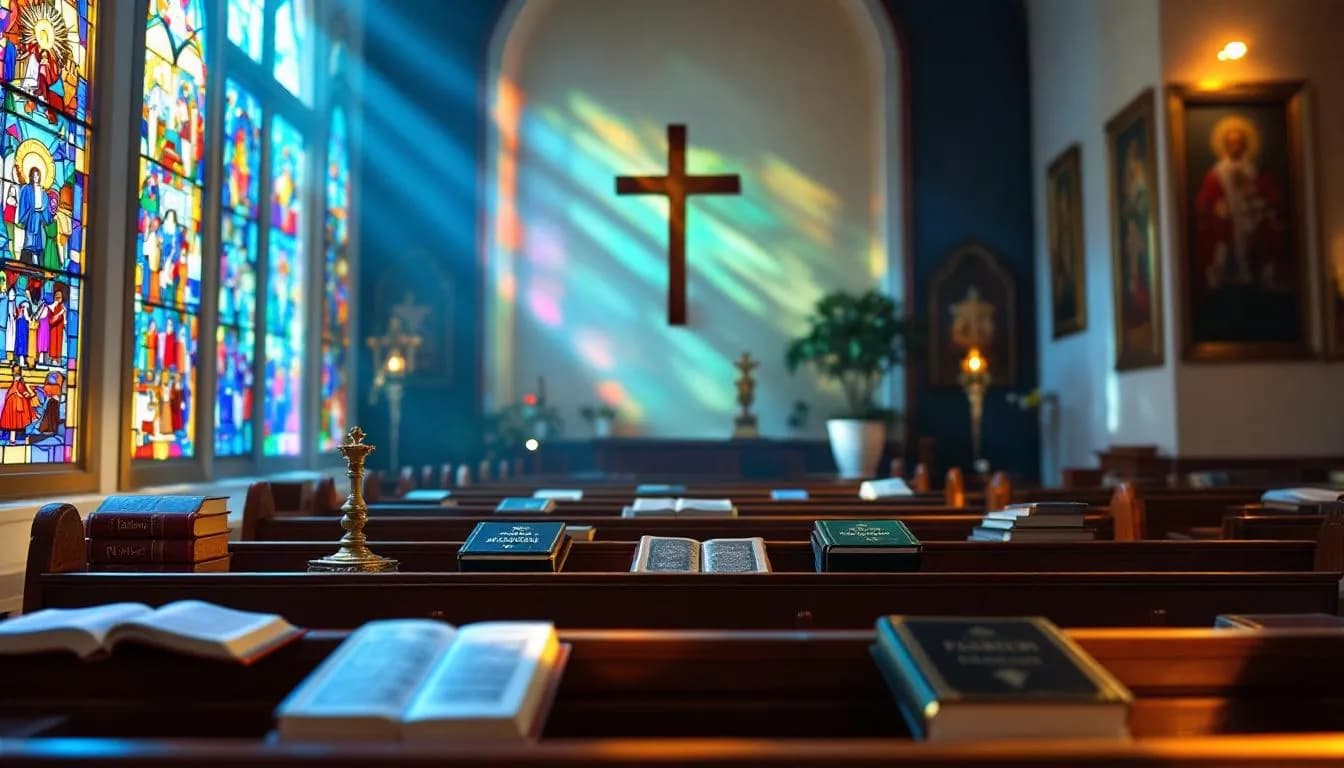
Bring a bilingual religious text in English and your new country's language. Following along helps you build vocabulary and stay grounded in services until your language catches up.
Non-Christian Faith Communities
Jewish communities exist in most European capitals and several Latin American cities - Mexico City, Panama City, and Buenos Aires all have established congregations. Lisbon, Madrid, and Barcelona have growing Jewish populations too. Communities tend to be small and may require an introduction or membership.
Muslim retirees will find mosques throughout Southeast Asia - Malaysia in particular. Larger European cities have established Muslim communities, but it's worth researching the specific area. Latin America has smaller Muslim populations, mostly concentrated in major cities.
Buddhist temples are everywhere in Thailand, but services are in Thai. You can visit, observe, and meditate - full participation means learning the language and customs. Hindu temples exist in Malaysia but are less common outside India.
Building Community When the Infrastructure Isn't There
Religious community doesn't require a building or a full congregation. Start a small group - a weekly scripture discussion, a shared meal on holidays, a volunteer project. Some of the most meaningful expat fellowships started with three people around a kitchen table.
- Online services from your home church can supplement whatever's local
- Zoom Bible studies or prayer groups keep you connected to your U.S. community
- Volunteer work often connects you with like-minded people faster than formal services
- Religious holidays are natural gathering points for expats across denominations
Your spiritual life abroad might look different than it does at home - a different denomination, another language, a small group instead of a full congregation. That's not failure. The real question is whether you're flexible enough to find something meaningful in whatever form it takes.
Ready for the next step?
Check out our country-specific guides to see exactly how to apply these steps in your dream destination.
Browse Country Guides