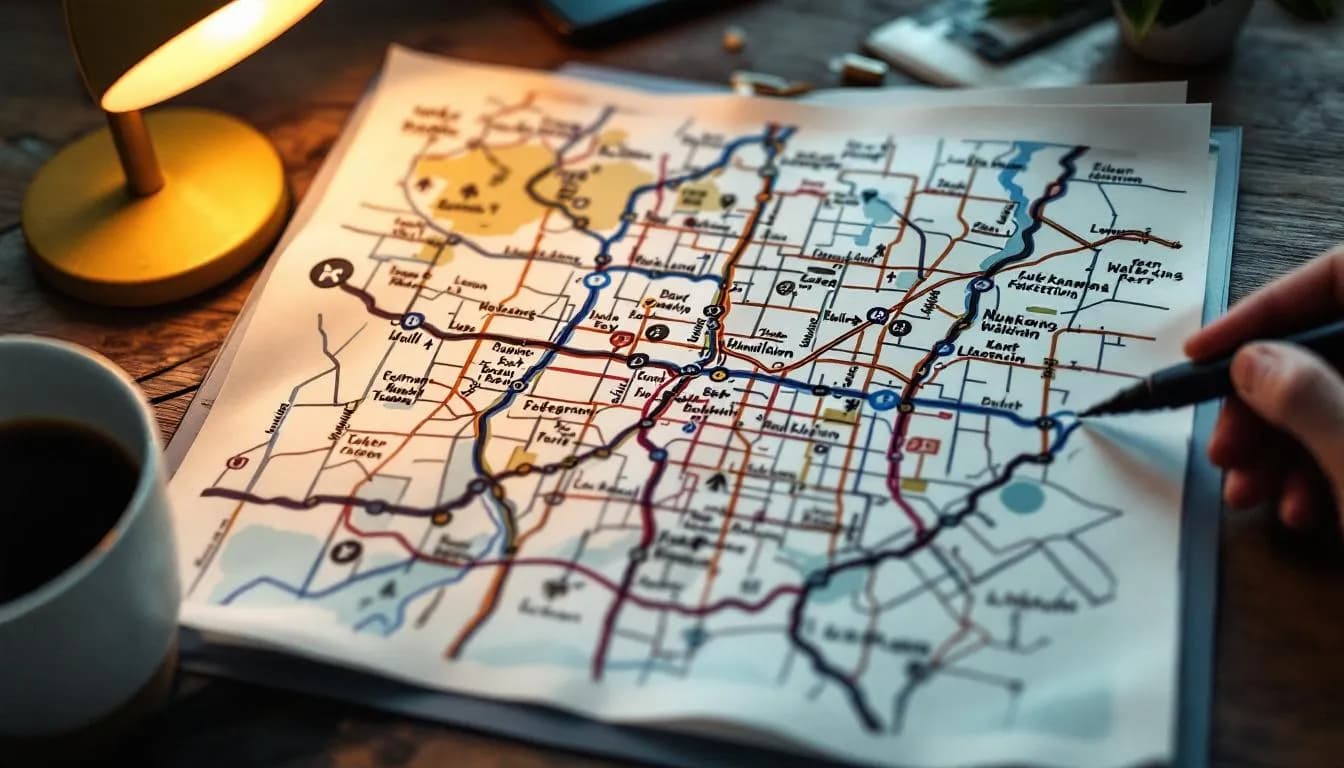
The first few weeks abroad, everything takes effort. Finding the pharmacy, figuring out the bus, buying groceries without accidentally getting the wrong thing - it all requires concentration. That's expected. What catches most people off guard is how long that phase lasts.
Feeling oriented isn't just knowing where things are. It's building the muscle memory of daily life - the routes you stop thinking about, the shops where people recognize you, the rhythm of when things open and close. Here's how that actually unfolds.
Weeks One and Two: Build Three or Four Base Routes
Don't try to learn the whole city. Your only goal is to get a handful of routes into your legs - apartment to grocery store, grocery store to pharmacy, pharmacy to a café you like. Walk them repeatedly, morning and evening if you can.
The landmarks that matter aren't on Google Maps. The building with the blue door. The corner that smells like a bakery. The street where the tram slows down. Those become your anchors when you're tired and your brain stops working.
Take a photo at each turn the first time you walk a new route - not for social media, for yourself. On day three when you're exhausted, those photos remind you which street has the yellow awning.
Weeks Three to Six: Expand Beyond the Basics
This is when you start going places you don't strictly need to go. You find the cheaper pharmacy, the park worth visiting, the street market that happens on Thursdays. You figure out which bus goes to the bigger grocery store.
You'll also make the mistakes that teach you things. You take the wrong bus and discover a neighborhood you like better. You learn that 'closed for lunch' means two hours, not thirty minutes. A guidebook can't give you that.
- Find where essential services cluster - clinics, banks, government offices
- Identify backup options for everything: second grocery store, second pharmacy
- Learn the local rhythm - what's open late, what closes Sundays, what shuts down for holidays
- Stake out your 'third place' - the café, park bench, or library where you decompress
Month Two to Three: The Shift You've Been Waiting For
Somewhere around week eight, you stop pulling up Google Maps for your daily routes. You recognize the bus driver on the morning shift. The woman at the produce stand knows you buy the same vegetables every week. You have opinions about which ATM has the shortest line.
You've also picked up the ten words that smooth everything - please, thank you, excuse me, how much, where is. Even in high-English-proficiency countries like Portugal or Malaysia, those words matter. In places like Thailand or Ecuador, they matter even more.
The real sign you're oriented isn't knowing where everything is. It's when someone stops you on the street to ask for directions - and you can actually help them.
What Makes Orientation Happen Faster
Walkable neighborhoods help a lot. When you pass the same shops on foot every day, your mental map builds faster than it ever would from the back of a taxi. Routine matters too - same coffee shop most mornings, same route for evening walks.
- Use the same shops repeatedly instead of trying somewhere new every time
- Walk when you can - you absorb more at three miles per hour than at thirty
- Say yes to neighborhood events when you're invited - markets, festivals, local gatherings
- Accept that getting lost is part of the process, not a sign something's wrong
How You Know You're Actually There
You'll know when you stop thinking about it. When you can run three errands without checking your phone. When you notice changes - a new shop opened, that street is under construction. You're paying attention in a relaxed way, not a stressed one.
For most people, this takes two to three months of actually living somewhere - not visiting. Living means buying groceries, doing laundry, dealing with a leaky faucet, walking to the post office. The mundane stuff is what builds the foundation.
Keep a simple list of 'firsts' during your first 90 days - first time you bought produce without pointing, first bus trip alone, first time you didn't need directions. Looking back at that list around month three is surprisingly grounding.
Ready for the next step?
Check out our country-specific guides to see exactly how to apply these steps in your dream destination.
Browse Country Guides