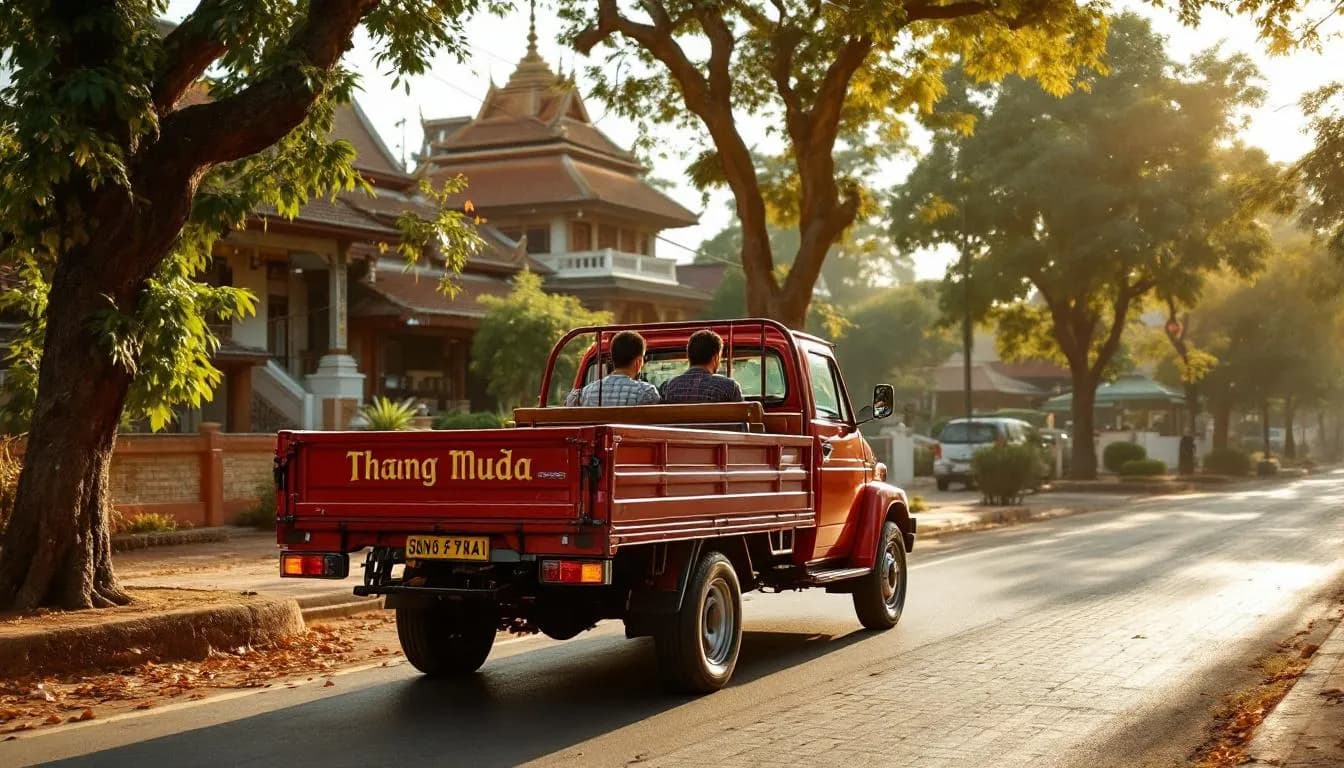
I sold my car six months before moving to Chiang Mai. Back home, that would've been unthinkable - grocery runs, doctor's appointments, everything required four wheels. But here? Not driving isn't a compromise. It's just how most expats live.
After a week of tracking my movements, I've got a clear picture of what car-free life actually costs and requires. No rose-colored glasses, just the logistics of getting around a city of 130,000 without your own transportation.
The Red Truck Economy
Songthaews - those red pickup trucks with benches in the back - run fixed routes through the city for 30 baht (about 85 cents). You flag them down, hop in, and ring the bell when you want off. This week I took 11 songthaew rides covering everything from the morning market to my Thai language class across town.
For trips outside the shared route system, you negotiate a price before getting in. I paid 100 baht ($2.85) to get to my dentist appointment in the Nimmanhaemin area and 80 baht ($2.30) back. Door-to-door service without the hassle of parking or the cost of owning a vehicle.
Always confirm the price before getting in a songthaew for a private trip. Point to your destination on a map if your Thai isn't confident yet - it prevents misunderstandings at the end of the ride.
Walking More Than You'd Think
The Old City is about 1.5 kilometers on each side, and I walked most of it this week. Morning coffee runs, evening dinner spots, the Saturday market - all within 20 minutes on foot. The heat takes adjustment, but you learn to time walks for early morning or after 5 PM when temperatures drop.
My phone tracked 47,000 steps over seven days, roughly double what I averaged back in the States. The difference? I'm not jumping in a car for a five-minute drive to pick up milk. The 7-Eleven is a ten-minute walk, so that's what I do.
When You Need More Range
Grab (Southeast Asia's version of Uber) fills in the gaps. I used it twice this week - once for a late dinner pickup when songthaews were scarce, and once to haul groceries back from Rimping Supermarket. Total cost: 147 baht ($4.20) for both trips. That's less than a week's worth of gas would've cost me back home.
Some expats rent motorcycles for $50-75 per month, which makes sense if you're heading outside the city regularly. But for urban living, the combination of walking, songthaews, and occasional Grab rides costs me about $37 monthly according to my tracking app. My monthly transportation budget back home was closer to $380.
- Songthaews (shared routes): $9.35 for 11 rides
- Private songthaews: $5.15 for 2 trips
- Grab rides: $4.20 for 2 trips
- Walking: Free, plus unintended exercise
- Total weekly cost: $18.70
Ready for the next step?
Check out our country-specific guides to see exactly how to apply these steps in your dream destination.
Browse Country Guides