Most Americans spend retirement driving everywhere. Grocery store, doctor's office, coffee with friends-it all requires getting in the car, finding parking, and burning gas. But in cities like Ljubljana, Porto, or Chiang Mai, retirees walk out their front door and everything's right there.
This isn't about tourism or sightseeing. It's about how your actual daily routine changes when you don't need a car for basic life tasks.
Morning Errands Become Social Time
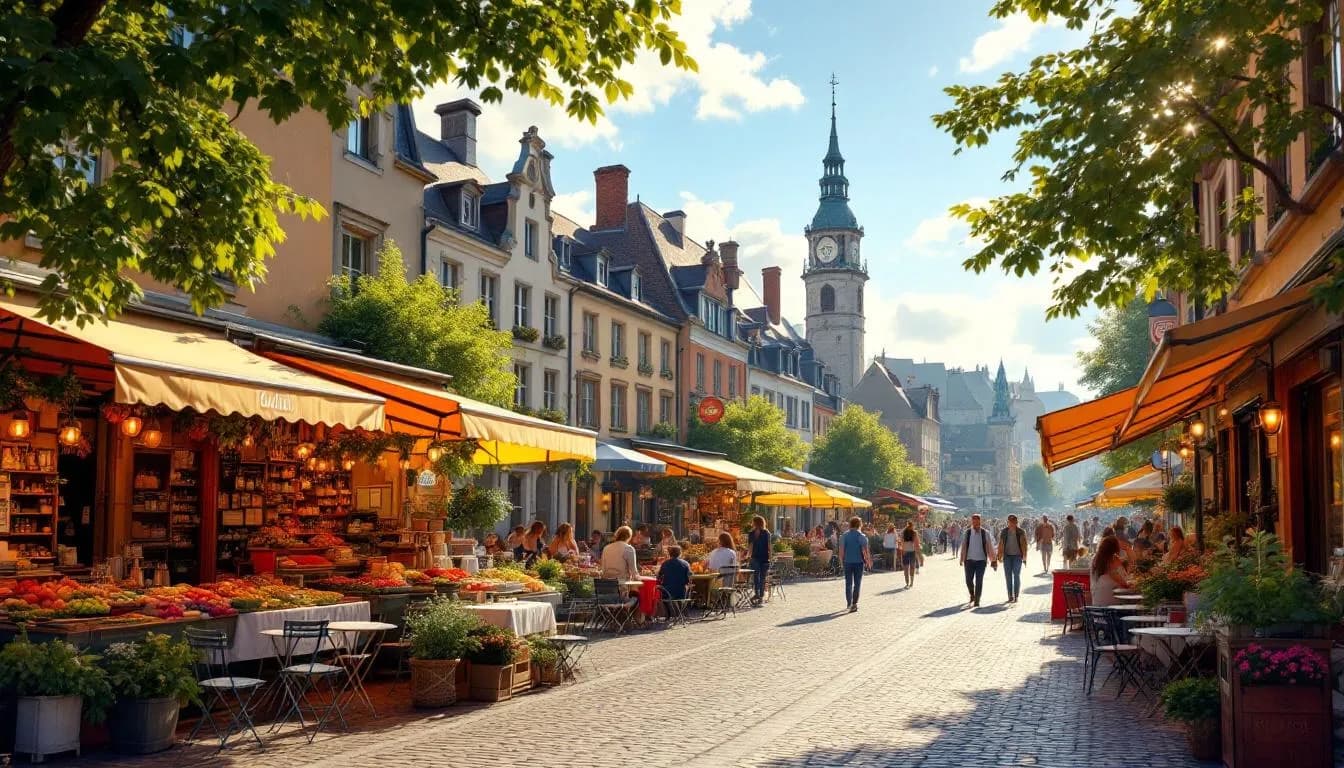
Your day starts with a walk to the bakery or market. Not because you're trying to be quaint-because fresh bread costs $1.50 and the bakery's three blocks away. You see the same faces, learn a few words in the local language, and somebody eventually remembers you like the darker rolls.
By 9am you've walked a mile, bought groceries, and had two conversations. Back home, you'd still be backing out of your driveway to hit the Safeway parking lot alone.
Healthcare Doesn't Require Planning Your Week
Need a prescription refilled or a blood test? The clinic's a 15-minute walk. In Slovenia, you'll spend about $80 monthly for healthcare insurance. In Thailand, around $150. Either way, you're walking there instead of driving 30 minutes each way and sitting in a parking lot.
Check if your neighborhood has a pharmacy within walking distance during your housing search. It matters more than you'd think when you're picking up medications regularly.
Follow-up appointments don't eat your afternoon. You walk over, you walk back, and you've still got time to meet someone for lunch.
The Money You're Not Spending Adds Up Fast
No car payment. No insurance. No gas. No registration fees or oil changes or parking tickets. In Portugal, monthly transport costs average $43 if you're using buses and trams occasionally. In Mexico, it's $27. Compare that to the $700+ most Americans spend monthly on car ownership.
That's an extra $7,000+ yearly that stays in your account. Some retirees use it to travel more. Others just sleep better knowing they're not burning through savings on depreciation and maintenance.
Your Day Ends With Options, Not Obligations
Dinner isn't a production requiring designated drivers and parking strategies. You walk to a restaurant, spend $10-15 on a meal in Vietnam or $18 in Poland, and walk home. If you're tired, you skip it and grab something from the corner shop you passed on your way back from the pharmacy.
The flexibility changes how you think about your time. Nothing requires advance logistics. You're not trapped at home because driving feels like a hassle. You just go.
Ready for the next step?
Check out our country-specific guides to see exactly how to apply these steps in your dream destination.
Browse Country Guides