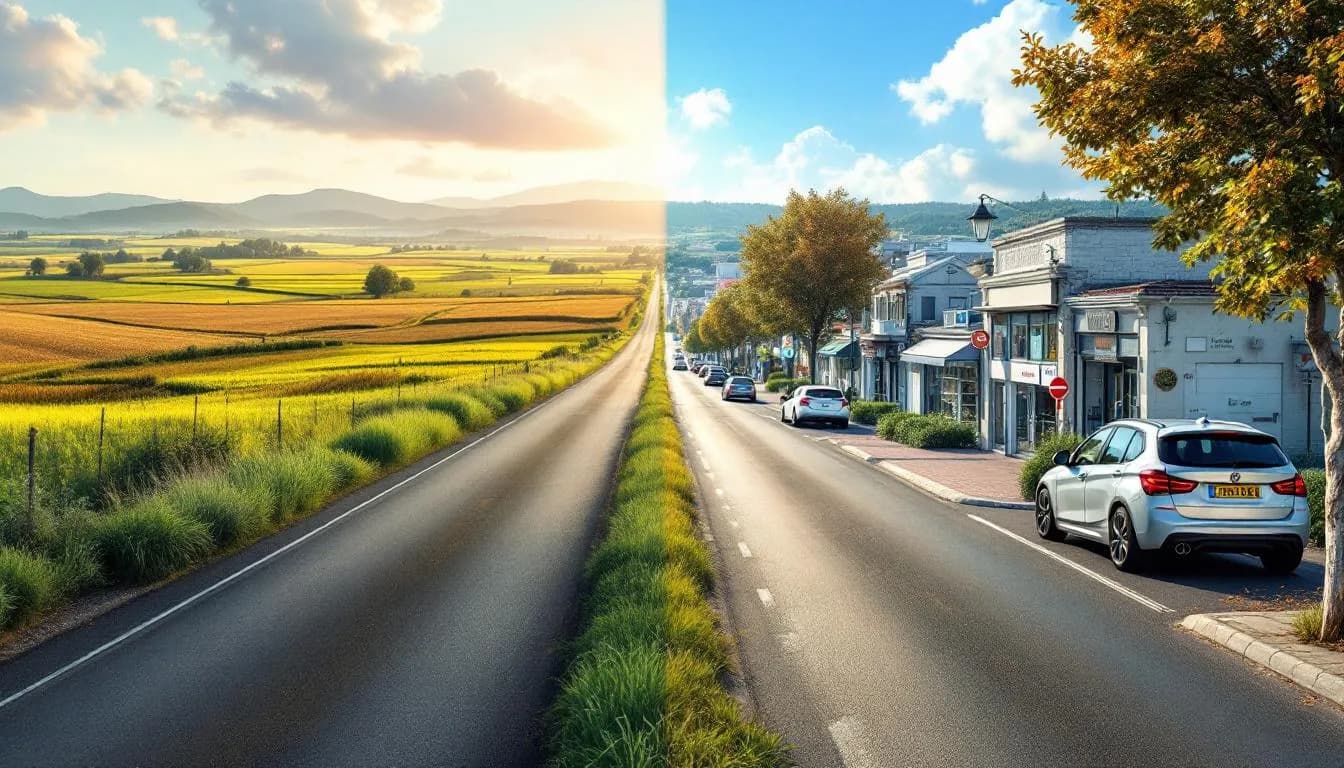
A quiet village in Portugal feels nothing like Lisbon. A beach town in Thailand runs at a completely different pace than Bangkok. Same country, completely different retirement. Where you land within that country shapes your daily life more than most people expect.
This isn't about which option is better - it's about which one fits how you actually want to live. The tradeoffs are real, and they're worth thinking through before you sign a lease.
The Cost Difference (It's Not Always What You Think)
Rural areas are usually cheaper, but not always dramatically so. In Portugal, a one-bedroom in Lisbon runs around $963/month. A smaller town might be $650-700. Real savings - but not half the price. In Thailand, the gap is wider: roughly $500 in Bangkok versus $300-350 in Chiang Mai or a beach town.
Popular retirement towns in Costa Rica or Mexico can run nearly as high as city rents because expats drove prices up. And cities sometimes offer better value for what you get - more housing options, more competition keeping prices honest.
Rural areas often require a car - factor in insurance, maintenance, and fuel before assuming you'll save money by leaving the city.
Healthcare Access
This is where cities pull ahead, and it matters more as you get older. Major cities in Thailand, Malaysia, and Spain have excellent private hospitals with English-speaking staff and specialists across every department. Rural areas might have a solid clinic for routine care, but anything serious means a trip to the city.
In smaller European countries like Slovenia or Portugal, even mid-sized towns have decent healthcare infrastructure. In Latin America, it's more variable - a beach town in Panama might have a good clinic or might have a pharmacy and not much else. Research the specific town, not just the country.
- Cities: Multiple hospitals, specialists, emergency care, English-speaking doctors
- Towns: Local clinics for routine care, may need to travel for anything serious
- Rural areas: Limited facilities, usually in the local language only - plan for medical travel
Social Life and English Speakers
Cities and popular retirement towns make it easy to plug into an expat community fast. Facebook groups, English-language meetups, people who've been through exactly what you're going through - it's all there. Rural areas can get lonely if you don't speak the language or aren't naturally good at making friends from scratch.
That said, some people prefer rural for exactly that reason. There's no expat bubble to hide in. You learn the language faster, get to know your actual neighbors, and become part of a real community. It's harder - but for some people, it's more rewarding.
Be honest with yourself: Are you energized by meeting new people and working through language barriers, or does that sound exhausting? Your answer matters more than any general advice.
Practical Logistics
Cities make the administrative side of expat life much easier. Visa renewals, banking, finding a specialist, tracking down a specific product - it's all within reach. Rural living trades that convenience for quiet, and you need to be genuinely okay with that.
Internet is worth checking before you commit anywhere rural. Cities in Thailand, Portugal, Poland, and Vietnam have excellent fiber connections. Rural areas can be fine - or frustratingly slow. If you're staying connected with family over video calls or managing finances online, verify the actual speeds for that specific location.
How to Actually Decide
Think about your actual days, not the postcard version. Do you want museums, restaurants, and variety within walking distance? You need a city. Do you want hiking, gardening, and a slower pace with fewer distractions? Rural makes sense. Want something in between? Look at mid-sized towns - they're often the best of both.
You also don't have to decide forever. Plenty of retirees start in a city to get their bearings, then move somewhere quieter once they know the country. Others do the opposite. Your retirement, your timeline.
Try before you commit: Rent for a month in a city and a month in a smaller area before signing a year-long lease. How you feel day-to-day will tell you more than any research.
Ready for the next step?
Check out our country-specific guides to see exactly how to apply these steps in your dream destination.
Browse Country Guides