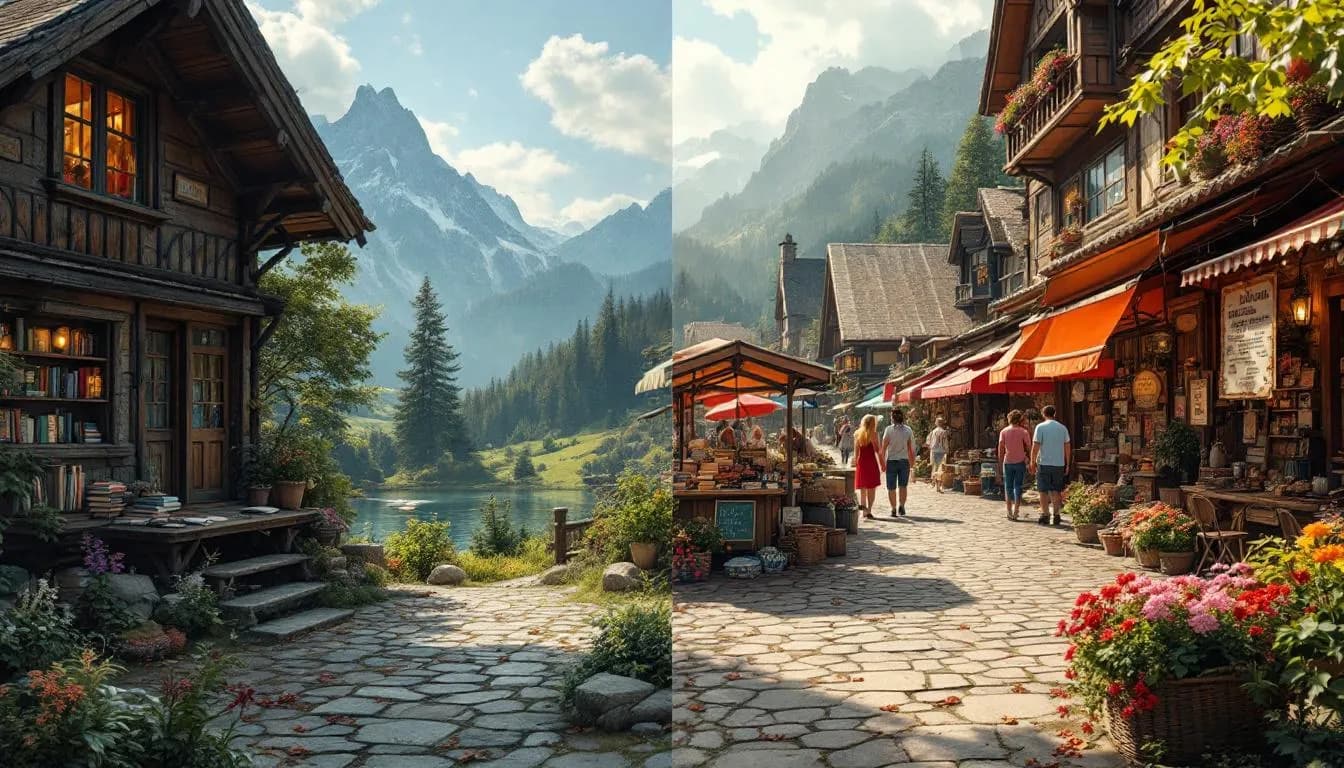
You've spent decades adapting to workplaces and social situations that weren't quite your speed. Retirement abroad is your chance to stop adapting and start choosing.
The question isn't which country is 'best' - it's which environment will energize you versus slowly grind you down. That comes down to personality more than most retirement planning resources admit.
If You Need Time Alone to Recharge
Introverts don't hate people - they just need regular stretches of quiet to feel like themselves. If constant social obligation wears you out, avoid places where interaction is baked into every errand.
Slovenia is a strong option. High English proficiency means you can handle daily tasks without forced small talk. A one-bedroom in Ljubljana runs around $743 a month, the country is rated very safe, and there's plenty of space - physical and social - when you need it.
Japan works well too, despite the language barrier. The culture genuinely respects privacy and personal space. Rent averages around $535 a month in city centers, with excellent internet and healthcare. The tradeoff: English proficiency is low, so translation apps become a daily tool.
- Look for countries where daily errands don't require lengthy conversations
- Reliable delivery services and online banking reduce how often you need to be 'on'
- Cities with established expat populations mean you won't constantly stand out as a foreigner
- Confirm private hospitals have English-speaking staff even if general English proficiency is low
If You Get Energy From Being Around People
Extroverts sometimes worry they'll lose the built-in social structure that work provided. You won't - you just need a place where meeting people happens naturally, not through expat meetups you'll skip half the time.
Mexico is a solid pick. Large expat communities in places like San Miguel de Allende and Playa del Carmen mean you'll run into English speakers constantly. Rent runs around $746 a month, the culture is inherently social, and healthcare insurance is about $200 a month with widely available English-speaking doctors.
Portugal works too. Lisbon and Porto have active expat scenes without feeling like isolated American bubbles. High English proficiency among younger locals means you can connect with people who actually live there, not just other Americans passing through. A one-bedroom runs around $963 a month.
Don't confuse 'lots of expats' with 'easy to make friends.' Some expat communities are cliquey or transient. Before committing to a city, look for established social clubs, volunteer groups, or hobby communities that match your interests.
If You Want the Option to Do Both
Most people aren't extreme introverts or extroverts. You want options, not obligations - places where you can turn social interaction up or down depending on the day.
Thailand handles this well. Chiang Mai has a real expat community if you want company, but the culture doesn't push you into constant interaction. Rent averages around $500 a month with excellent internet. You can show up at expat events when you feel like it or stay invisible in your neighborhood when you don't. English-speaking doctors are widely available at private hospitals.
Spain offers similar flexibility. In Valencia or Málaga, you'll find expat groups without the density of some Mexican cities. Rent runs around $967 a month. The culture values social time but also respects the afternoon siesta - built-in downtime that doesn't require explaining yourself to anyone.
Red Flags Worth Watching
- Small expat communities can feel suffocating for introverts - everyone knows your business fast
- Very low English proficiency forces constant social effort just to handle basic tasks
- Places where foreigners are rare can get isolating for extroverts who need regular connection
- Extreme heat or humidity - like much of Vietnam - keeps you indoors during big chunks of the day, cutting off casual social time
Climate affects this more than people expect. If spontaneous time outdoors is part of how you connect with people, factor in how many months a year that's actually possible.
Test It Before You Commit
A two-week vacation won't tell you much - you're in tourist mode, not daily-life mode. Rent an apartment for two or three months before making any permanent decisions. Pay attention to how you feel once the novelty wears off.
Are you dreading errands because of forced small talk? Lonely by day ten? Those feelings matter more than any country ranking.
Try a 'test week' where you live like a local - grocery shopping, cooking at home, handling admin tasks, skipping the tourist sites. If you're climbing the walls by day three, or blissfully content, that's your real answer.
Ready for the next step?
Check out our country-specific guides to see exactly how to apply these steps in your dream destination.
Browse Country Guides