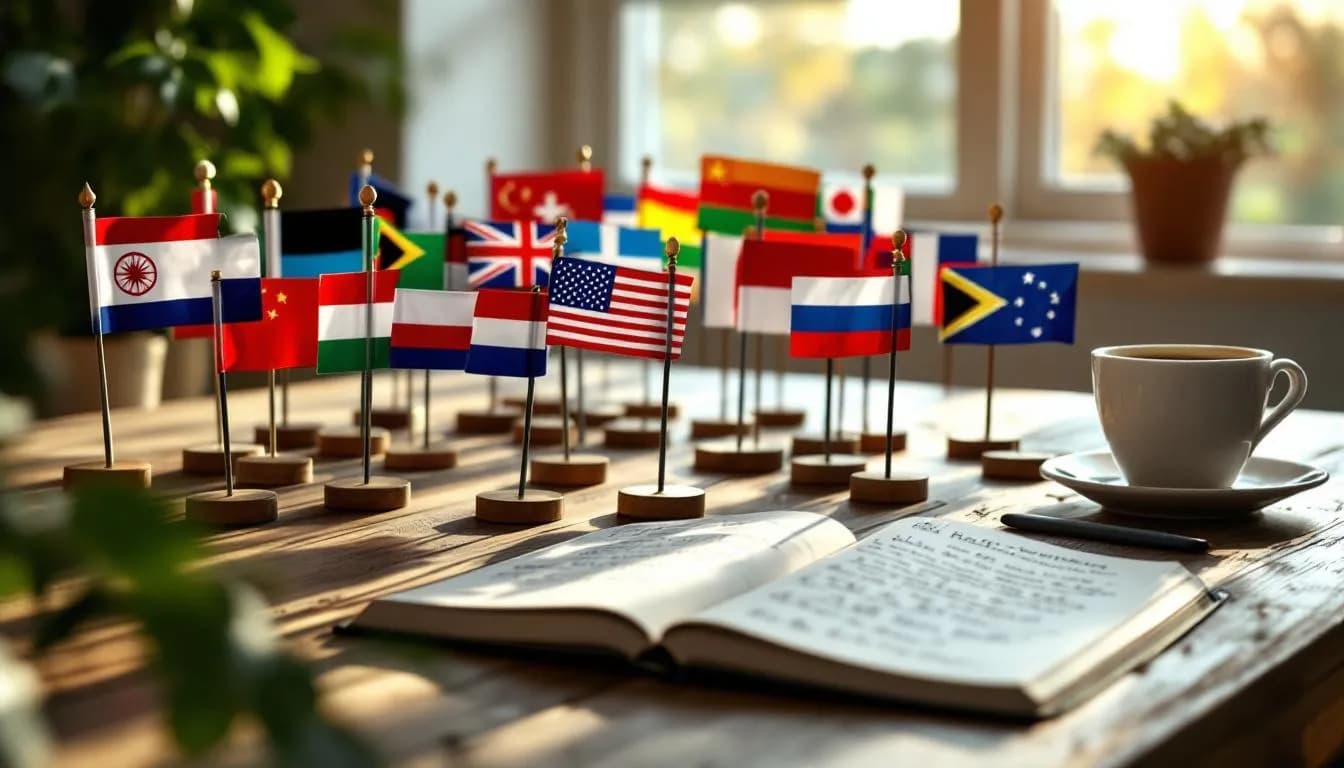
Most Americans stress about not speaking the local language before moving abroad. That's fair. But the retiree who speaks broken Spanish and reads social situations correctly will do better than the one with perfect grammar who keeps getting the tone wrong.
Cultural etiquette isn't about politeness for its own sake. It's about not accidentally insulting your landlord, alienating your neighbors, or marking yourself as someone who'll never quite fit in. The good news: you can learn most of this before you ever board the plane.
Time: When 7pm Means 7pm (And When It Doesn't)
In Germany or Japan, an invitation for 7pm means 7pm - maybe 6:58. In Mexico or the Philippines, 7pm is a starting suggestion. Showing up exactly on time might mean you're there before the host has finished getting ready.
Portugal sits somewhere in the middle. Business meetings? Be on time. Dinner at someone's home? Give it 15 minutes. Getting this wrong won't cause a scene, but getting it right signals that you actually pay attention.
In your first month, watch how locals handle invitations. If someone says 'come by around 6,' ask a trusted expat or local friend whether that means 6:00 or 6:30. The answer changes how people perceive you.
Physical Greetings and Personal Space
Americans have a wide personal space bubble. We shake hands, hug close friends, and stop there. Move to France or Spain and you're kissing cheeks with people you just met. Move to Japan or Thailand and you're bowing from a respectful distance.
Getting the greeting wrong once is fine - everyone expects that from a newcomer. Doing the same stiff handshake from three feet away after six months is what signals you're not paying attention.
- Southeast Asia (Thailand, Vietnam, Malaysia): Don't touch heads, remove shoes indoors, use your right hand for giving and receiving
- Latin America (Mexico, Panama, Costa Rica): Expect closer conversation distances, cheek kisses after you've met someone once or twice
- Southern Europe (Spain, Italy, Portugal): Cheek kisses are standard, even in semi-professional settings
- Eastern Europe (Poland, Slovenia): Handshakes are formal, personal space is larger - let locals set the pace for anything warmer
Direct Talk vs. Saving Face
Americans say what they mean. We complain when something's wrong and call it honesty. In much of Asia and Latin America, that approach will work against you.
In Thailand or the Philippines, bluntly correcting someone or saying a flat 'no' causes them to lose face. They'll smile, agree with you, and then quietly avoid you. In Japan, direct confrontation is so uncomfortable that people will go to significant lengths to hint at a problem rather than state it outright.
This plays out constantly in practical situations - dealing with a landlord, working through a billing mistake, asking for help at a government office. Walk into a Thai immigration office and loudly complain that your paperwork is taking too long, and you've just made things harder for yourself.
Learn how locals express disagreement. It's usually softer, more indirect, and comes with a smile. What feels passive or 'fake' to you is often just how things get done - and it works.
Hierarchy, Age, and How You Address People
Americans are casual. We use first names with almost everyone, joke around quickly, and treat that as friendliness. In many countries, it reads differently.
In Japan, how you address someone depends on their age and role. In the Philippines, showing respect to elders is built into the language and daily interactions. In Poland, you don't move to first names until someone invites you to.
As a retiree, your age often works in your favor abroad - you'll get more patience and more respect in most countries. But that doesn't mean treating a doctor, government official, or landlord like a casual buddy. The deference still runs both ways.
What Happens When You Get It Wrong
Nobody's getting deported for using the wrong greeting. But you'll notice the slow drift. Your landlord takes longer to reply. Your neighbors stop dropping by. The clerk at the pharmacy stays polite but never warm.
You end up isolated and frustrated, convinced locals are unfriendly. Meanwhile, the retiree down the street who figured out the social cues early is getting dinner invitations and neighborhood recommendations for the best doctor in town.
Most locals are genuinely forgiving of mistakes - if they can see you're trying. Watch how people interact with each other. Ask questions. Adjust. You don't need to become Portuguese or Thai. You just need to show that you're paying attention.
Ready for the next step?
Check out our country-specific guides to see exactly how to apply these steps in your dream destination.
Browse Country Guides